


Clean energy represents more than 90% of the new energy capacity added to the U.S. grid so far this year. It’s the cheapest, most readily-available energy – largely because it has no fuel cost.
What is fuel cost? Every time you flip on a light switch, you’re relying on a power plant somewhere that had to pay for two very different things to make that electricity: the cost of building the plant, and the cost of running it – the fuel. That second cost – the “fuel cost” – often matters most to your wallet. It matters more each day, as America’s appetite for electricity, and the fuel to generate it, keeps rising. And the arithmetic is the same whether you vote red or blue.
Here’s the simple version
A gas plant, a coal plant, an oil-fired generator – all of them have to keep buying fuel, month after month, year after year, at whatever price the international market happens to be charging that day. When a war disrupts a shipping lane, when a winter storm freezes a pipeline, when a heat wave or cold snap spikes demand across three time zones at once, the price of that fuel can jump – and utilities pass most of that cost straight through to youl. For example, when in early 2026 Winter Storm Fern caused strained gas supplies in the Mid-Atlantic U.S., wholesale electricity costs in the region soared to over $1,000 per megawatt-hour – more than 20 times the typical price.
Solar panels, wind turbines, geothermal plants, hydroelectric dams, and nuclear reactors don’t have that problem. The wind is free. The sun is free. The heat coming out of the earth and the water flowing through a dam are free. Even nuclear fuel, while not free, is a tiny fraction of what it costs to run a nuclear plant. The same principle applies to vehicle costs: drivers of electric vehicles have zero fuel cost, while drivers of cars with internal combustion engines have to pay to buy gasoline, which may soon jump to $6 a gallon, due to Trump’s blunder in Iran.
This isn’t a talking point. It’s arithmetic.
Once you’ve built a clean energy project, the ongoing cost of keeping it running barely moves, year after year, regardless of what’s happening in global commodity markets. That’s not true of a power system built mostly on things you have to keep buying and burning, like gas, coal and oil.
Think of it like the difference between owning your home outright and renting month-to-month. The homeowner’s costs are mostly locked in. The renter is exposed to whatever the market does next. Most of America’s electricity grid, for the better part of a century, has been “renting” its power one fuel shipment at a time. Clean energy resources are the closest thing the grid has to home ownership.
“Most of America’s electricity grid, for the better part of a century, has been ‘renting’ its power one fuel shipment at a time. Clean energy resources are the closest thing the grid has to home ownership.”
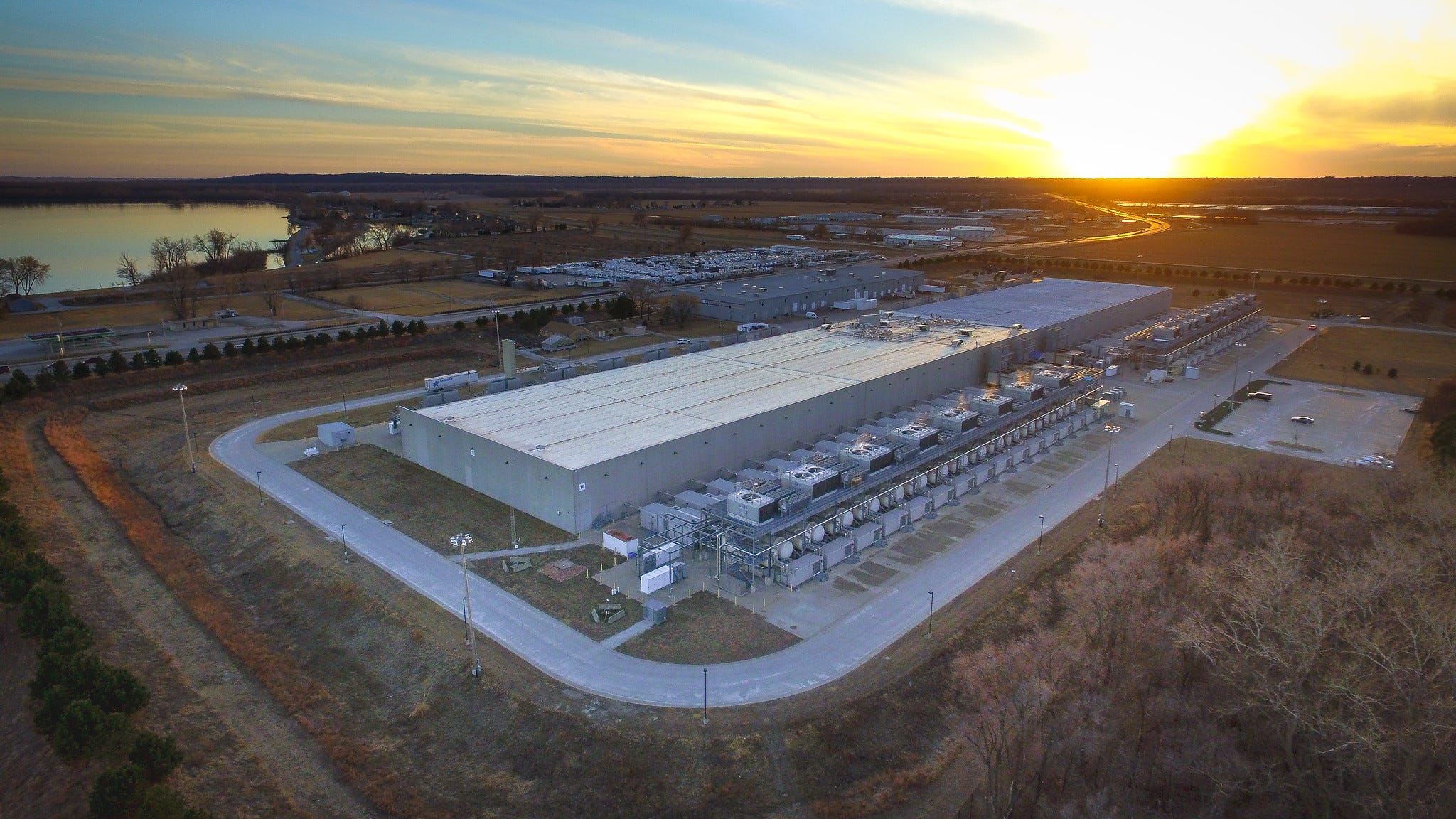
This matters more now than it used to, for a reason that has nothing to do with climate politics: electricity demand in the United States is growing again, after two decades of being roughly flat. Data centers, factories returning from overseas, and the ongoing shift toward electric vehicles and heat pumps are all adding more load onto the grid. Data centers, in particular, are expected to grow from using approximately 4% of U.S. electricity to accounting for nearly 20% of U.S. power consumption by 2035. Meanwhile, the rush of new data centers that are using off-grid natural gas power has pushed the cost of electricity produced with gas, which currently provides 40% of U.S. power, to its highest level in nearly two decades.
Insulating the grid from the next price spike
Every new megawatt of demand that gets served by a fuel-hungry power plant is another megawatt exposed to the next fuel price spike. Every new megawatt served by a low-fuel-cost clean resource is a megawatt that’s largely insulated from it. Clean energy is no-fuel-cost energy.
Now, none of this means clean energy is a free lunch. Building wind, solar, geothermal and nuclear capacity costs real money up front, and integrating variable renewable energy resources requires investment in transmission lines, energy storage, and modernized distribution infrastructure. But these are solvable challenges – and the market is already addressing them. Even accounting for those up-front costs, new utility-scale solar comes in at $40–$98 per megawatt-hour over its lifetime, against $51–$129 for a new gas plant. That’s a big part of why clean energy technologies such as solar and storage make up more than 90% of the new energy added to the grid so far this year.
A grid with more low-fuel-cost resources leaves ratepayers with less exposure to price spikes from factors such as foreign wars, weather disasters, rising demand and commodity speculators. Low-fuel-cost energy resources take a big, unpredictable variable off the table for the families and businesses who have too often been picking up the tab.
As policymakers, utilities and grid operators work to meet rising energy demand, we’d all do well to remember that clean energy is no-fuel-cost energy. And building more of it is essential for a more affordable, secure and prosperous America.
Watts on my radar
Notes from the Electric Era by Leah Stokes: “No, the Democrats’ Big Climate Law is Not Dead.”
“We found that the [Inflation Reduction Act] helped drive $185 billion in private investment into building factories that make solar panels, batteries, and electric vehicles. And here’s the amazing thing most people don’t know: nine in ten of those facilities are still getting built, under a president who promised to kill them.”
Read more from Leah Stokes →
Volts: How to Respond to Disinformation about Clean Energy, At Scale featuring Leah Qusba of GoodPower
“Climate campaigners are extremely familiar with large-scale, organized misinformation campaigns. But in recent years, misinformation about climate solutions, specifically about clean energy, has grown almost as ubiquitous... An organization called GoodPower is attempting to push back against this tide of slop.”
Listen to the interview with Dave Roberts →
Energy Empire with Jigar Shah: Jennifer Granholm’s Data Center Playbook for Governors
“Data centers have become one of the most charged political issues in the country, and it cuts across both parties. Electricity bills are climbing, 36 states are electing governors who will have to answer for it, and the question is the same in red states and blue: how do you welcome the investment without handing residents the bill?”
Listen or watch what Sec. Granholm had to say →
Canary Media: Solar-Plus-Storage Is Having a Global Growth Spurt
“Investors spent a record amount in the first half of 2026 on projects that combine renewable energy — mostly solar — with batteries.”
Read more from Canary Media →
Going to Climate Week NYC? Join me
Here are a few of the events I’ll be at:
Rural America & The Clean Energy Transition
Tuesday, September 22
This election season, energy affordability is a headline issue for voters, who will soon be casting ballots in three dozen governors’ races across the country. Canary Media and Advanced Energy United are hosting a panel with Jay Inslee and Heather O’Neill to share their insights and stories from meetings with gubernatorial candidates and incumbents this election cycle.
No Immunity for Big Oil: How Communities are Standing Up to the Fossil Fuel Industry’s Attacks on Science, Accountability, and the Law
Tuesday, September 22
As communities advance legal and legislative efforts to make Big Oil companies pay for climate damages, the fossil fuel industry is pulling every lever to escape accountability: lobbying Congress and state legislatures for broad legal immunity, attacking climate science and judicial education projects, and urging the U.S. Supreme Court to stop state and local climate deception lawsuits against oil majors before they can reach trial.
On the eve of the U.S. Supreme Court arguments, join a panel of climate accountability leaders to learn about these brazen efforts and how communities are fighting to protect their right to hold Big Oil accountable.