


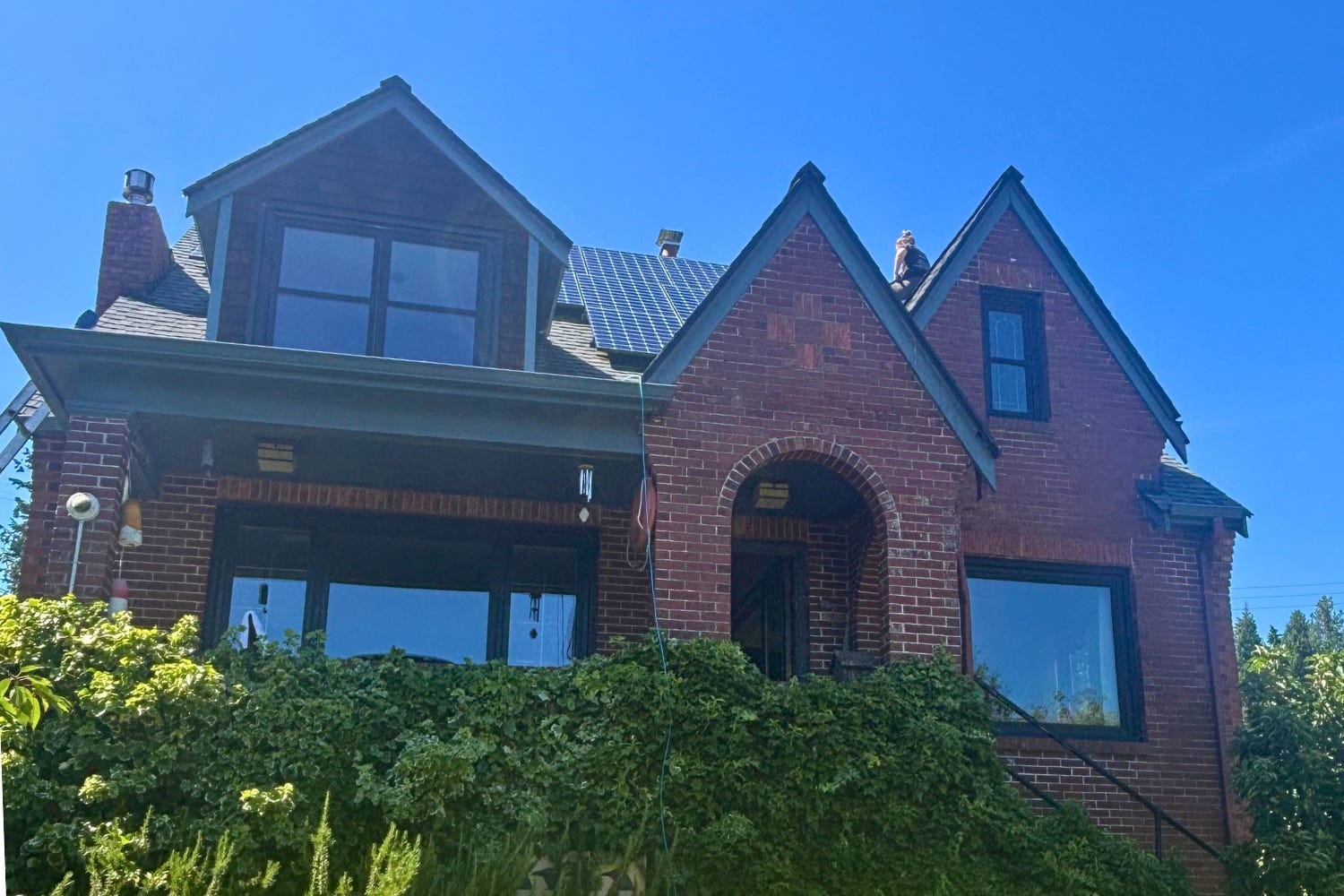
Most months, Trudi and I pay less than $20 on our electric bill – compared to $158, the average family’s monthly bill in the US today. We heat and cool our home, cook every meal, heat our water, and charge our car and virtually all of it runs on clean energy.
When we bought this house around 2000, that was far from the case. On a windy day, you could barely keep a candle lit inside. It was heated by an oil furnace, it had almost no insulation, and the single-pane windows might as well have been wide open.
Nothing about getting from there to here required a miracle. It took about 20 years, one project at a time, as we could afford it. And I believe that every American family should be able to make the same journey, without it taking nearly two decades to do so.
I just joined LinkedIn! Let’s connect there.
The game plan: Efficiency first, then electrify
We found our home on Bainbridge Island on a walk together more than 25 years ago. It’s a 1931 brick Tudor, near a wetland full of birds and surrounded by trees. We loved it, but it needed a lot of work.
We didn’t have the money to do everything we wanted to at once, so we did it the way most families would: one project after another, over two decades. Our utility, Puget Sound Energy, did an energy assessment of the house early on, which helped us see where to start.
Here’s roughly how it went:
Attic insulation. The home inspection missed that the attic had none. Insulating it was the first thing we did, and it’s still the biggest bang for your buck in home energy. (Our lath-and-plaster walls behind the brick can’t take blown-in insulation, so the attic mattered all the more.)
A heat pump instead of the oil furnace. We removed the oil tank, pulled the permits, and replaced a polluting, inefficient furnace with a heat pump. As a bonus, we got air conditioning for the first time, though the house stays comfortable enough that we rarely use it.
A heat pump water heater. I noticed the difference on our electric bill almost immediately – and these appliances can pay for themselves in just a few years.
Solar panels. Once we’d replaced the roof a few years ago, we added 16 solar panels. People assume solar doesn’t work in the Pacific Northwest, but we’re at about the same latitude as Germany, a country that’s covered in them. Today maybe a third of our neighbors have solar, too.
New windows. Going from single-pane to double-pane windows was a big expense but it was transformative. The wind stopped blowing through the house, and it became dramatically more comfortable. If we could have done it sooner, that would have been great, but we couldn’t afford it right away.
An induction range. We cooked on gas for years, but three years ago we made the switch to induction. We cook amazing meals on it, and it boils water faster than you’d believe.
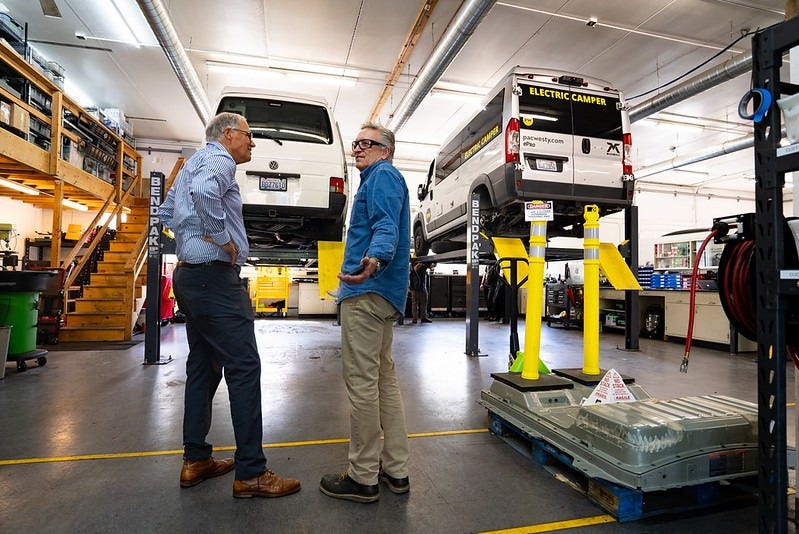
We’ve also had EVs or hybrids since 2001. This summer, we were excited to get a Honda Prologue with a range of more than 300 miles. With teenage grandkids that we love hanging out with, we just needed more room!
We’ve actually never installed a home charger. It would have meant upgrading our electrical panel, and since we don’t drive much, a regular household outlet covers nearly all our needs. And of course, we have all electric garden tools – better for the environment and much easier on the ears, too
Win, win, win
Our house is more comfortable. The house is no longer drafty. The temperature stays steady. It’s warmer in the winter and cooler in the summer.
It’s healthier. We’re not breathing fumes from a gas stove anymore, and neither are our grandkids when they visit. Research has linked gas stoves to higher rates of childhood asthma. That alone should make anyone think twice about what’s burning in their kitchen.
It’s cheaper to live here. Our house is about 2,500 square feet, and outside of the coldest winter months our electric bill is typically under $20. Last month, it was around $13. The solar panels bank extra power with the utility through the summer, which covers us into the fall. We still pay into Puget Sound Energy’s green power program to support renewables on the grid, and we take part in its demand response program, cutting our use during peak hours when the utility asks.
Here’s the thing about all of it: nobody goes back. Once you drive an electric car, you don’t return to gas. Nobody tears out a heat pump to put an oil furnace back in. There’s only one direction here, and people who make the switch enjoy it.
“Easy for you to say”
I know what some of you are thinking: of course a former governor can afford all this.
It’s a fair point, and I won’t pretend otherwise. Trudi and I have been fortunate. Some of our neighbors have also made the choice to install solar panels, mostly for climate or environmental reasons. Like us, they aren’t choosing between their power bill and their prescriptions.
The technology works for everyone. What doesn’t work for everyone is the upfront price tag. That’s a problem policy can solve.
Leaders need to help people over the first hill
Electric technology is cost-effective in almost every part of the home. Insulation, heat pumps, heat pump water heaters, solar, EVs: depending on the technology, they pay back in as little as a couple of years. Once they do, you’re making money on the investment. It’s like putting money in the stock market, except your return comes as a lower utility bill.
The barrier is the original capital investment. A family that can’t come up with thousands of dollars upfront never gets to enjoy the savings. So the job of public policy is simple: help people over that first hill.
It doesn’t take much. A small public contribution that covers even 10 percent of the cost can be enough to get someone to take the step. And every level of government has a role:
States can lead. Washington’s Climate Commitment Act funds programs that help lower-income households get these benefits, and extends them to schools and hospitals through upgrades like electric school buses and efficient heating and cooling. Washington was also the first state to help lower-income residents lease an electric vehicle, so they don’t need the capital to buy one.
Congress can make these upgrades affordable nationwide. The Inflation Reduction Act offered significant incentives for exactly this but the Trump administration has worked to dismantle as many of them as it can.
Utilities and local governments can offer rebates, energy assessments, and more public charging and car-share programs, so owning a home charger isn’t a prerequisite.
A word to governors and state leaders
Our house took 20 years to get to this point. It shouldn’t take families that long, and it shouldn’t depend on whether they happen to have the savings to spare – especially when people are stuck paying hundreds of dollars on their utility bills every month.
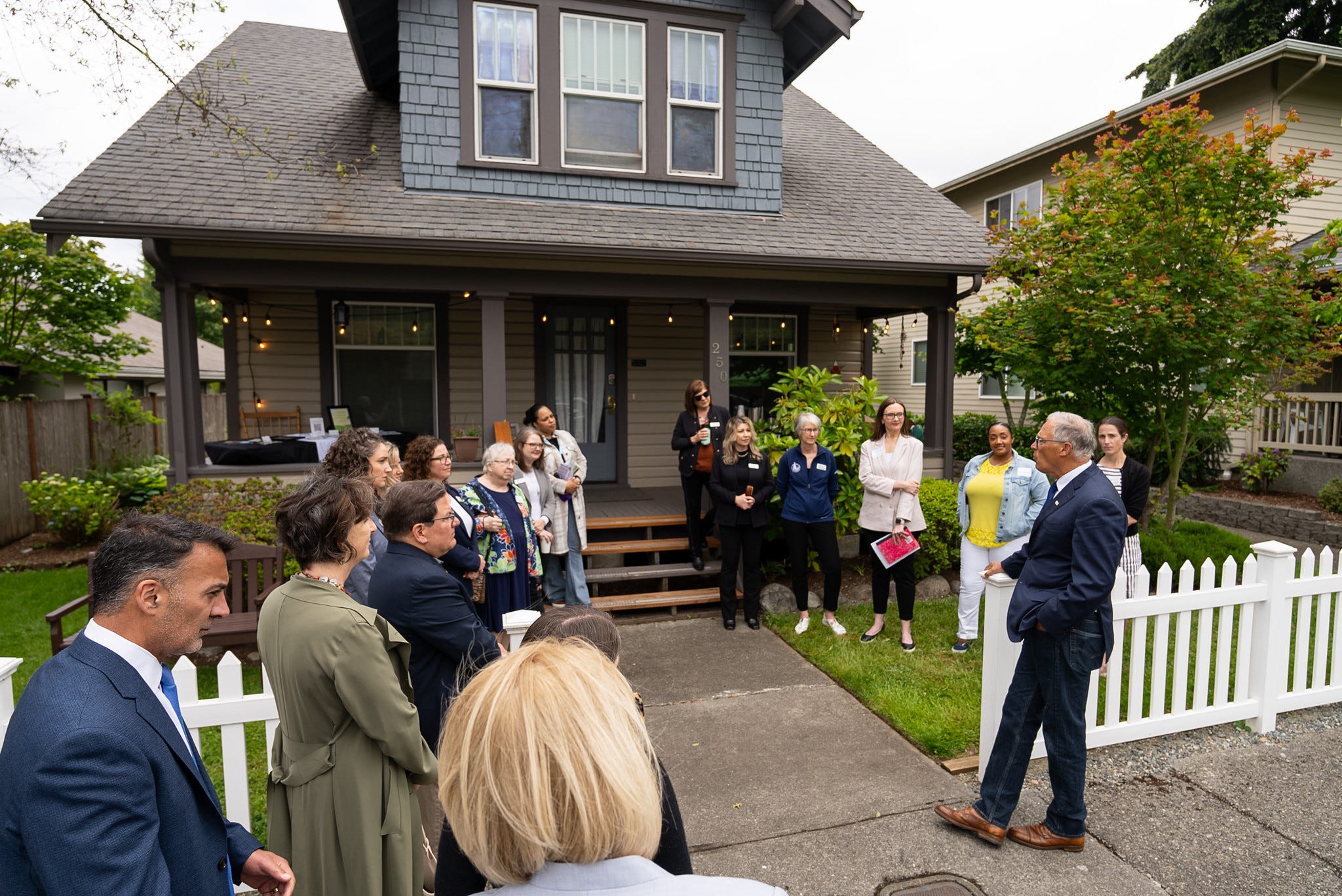
To the governors and legislators reading this: with federal incentives being rolled back, this work falls to the states more than ever. Governments don’t have to cover the whole cost. A modest public contribution, even 10 percent, can be enough to get a family to take the step. And a dedicated funding source like Washington’s Climate Commitment Act can keep it going. Your constituents will feel it in lower bills, more comfortable homes, and a healthier environment for their kids. It’s good policy and it’s good politics.
And if you’re planning to electrify your home: start with insulating the attic. Trust me.
We had a similar 20 year journey improving our expensive stucco-covered cardboard box in CA. The last piece? Underfloor insulation as our well ventilated crawlspace made floors freezing all winter. Cheap and so much cozier! One underrated part of increasing insulation is how much quieter the house is.
So, Grok says the pvwatts calculator says your (Bainbridge) solar panels make almost 2/3 the energy the southwest U.S.? That is surprisingly good.